
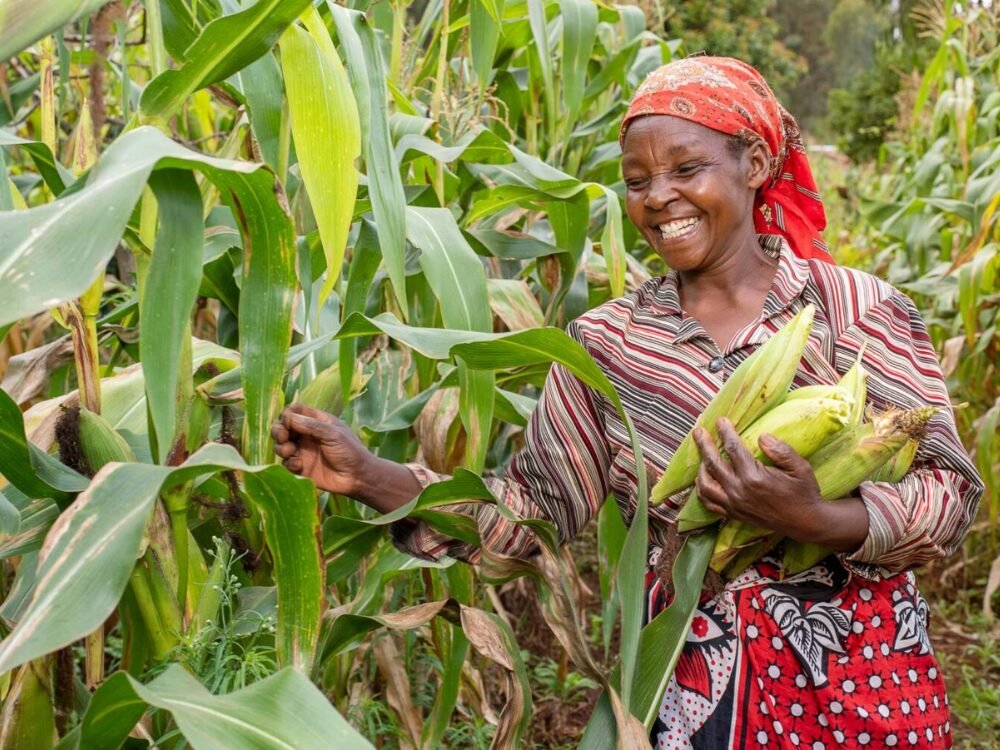
African Food Tech Startups Solving Agricultural Challenges
(adsbygoogle = window.adsbygoogle || []).push({});
Africa’s agricultural sector sits at the heart of the continent’s economy, livelihoods, and food systems.
Millions of households depend on farming, yet farmers across the continent continue to face challenges ranging from limited access to machinery and financing to poor market connections, inadequate storage, unpredictable weather, and post-harvest losses.
Technology is increasingly becoming part of the solution.
Across Africa, a new generation of food-tech and agritech startups is developing practical solutions that connect farmers to markets, provide access to equipment, improve food processing, deliver agricultural information, and make farming more data-driven. Instead of simply introducing technology for its own sake, many of these businesses are targeting specific problems that have affected African agriculture for decades.
(adsbygoogle = window.adsbygoogle || []).push({});
From digital tractor-sharing platforms to technology-enabled food processing, these startups demonstrate how innovation can strengthen the entire food value chain.
Why African Agriculture Needs Technological Innovation
African agriculture is largely made up of smallholder farmers who often operate on relatively small plots of land. While these farmers play an important role in feeding local communities, many lack access to the resources needed to increase productivity.
The challenges are interconnected.
(adsbygoogle = window.adsbygoogle || []).push({});
A farmer may have fertile land but lack machinery. Another may produce enough crops but struggle to find reliable buyers. Someone else may have a market but lose part of their harvest because adequate storage or processing facilities are unavailable.
Climate change adds another layer of uncertainty. Changing rainfall patterns, extreme weather events, pests, and soil degradation can make traditional farming methods increasingly difficult to rely on.
Technology cannot eliminate all these problems, but it can help farmers access information, equipment, finance, markets, and processing infrastructure more efficiently.
(adsbygoogle = window.adsbygoogle || []).push({});
1. Hello Tractor: Making Farm Machinery More Accessible
One of the biggest challenges facing African farmers is access to mechanization. Tractors and other agricultural machinery can dramatically reduce the time and labour required for farming. However, purchasing and maintaining heavy equipment is often financially unrealistic for smallholder farmers.
Nigeria-based Hello Tractor has developed a digital platform that connects farmers who need tractor services with tractor owners and operators.
Rather than requiring every farmer to purchase a tractor, the model makes agricultural machinery available as a shared service. The company’s technology also uses connected equipment, data, and fleet-management tools to coordinate tractor operations.
Hello Tractor says its network has serviced more than 2.5 million farmers and engaged more than 5.5 million acres across its markets.
The concept demonstrates an important principle for African agriculture: access can sometimes be more valuable than ownership.
A farmer does not necessarily need to own an expensive tractor. What matters is being able to access one at the right time, at an affordable cost.
2. Apollo Agriculture: Combining Finance, Inputs and Farm Support
Access to agricultural inputs is another major challenge. Seeds, fertilizer, crop protection products, insurance, and other inputs can significantly influence farm productivity. However, smallholder farmers may struggle to purchase everything they need before the planting season.
Kenya-based Apollo Agriculture has built a technology-driven model around providing smallholder farmers with access to agricultural inputs, financing, and related services.
The idea is particularly important because agricultural challenges rarely exist independently.
Giving farmers fertilizer without financing may not solve the problem. Providing financing without agricultural advice may also produce limited results. Combining different services can potentially address several barriers simultaneously.
This bundled approach represents a broader trend in African agritech: startups are increasingly trying to build complete agricultural ecosystems rather than isolated digital tools.
3. Releaf: Using Technology to Improve Food Processing
Agricultural innovation does not stop when crops leave the farm.
Processing is an important part of the food value chain because raw agricultural products often need to be transformed before reaching consumers or industrial buyers.
Nigerian food-tech company Releaf focuses on improving agricultural processing and supply chains, initially concentrating on the oil-palm sector.
The company has developed technologies designed to improve processing efficiency while working with smaller factories located closer to smallholder farmers. This approach can reduce transportation requirements and improve processing yields.
The model highlights a frequently overlooked part of food security.
Producing more food is important, but getting more value from the food already produced is equally important.
Better processing can help reduce inefficiencies, create new economic opportunities, and connect farmers with larger commercial markets.
4. Digital Platforms Are Connecting Farmers to Information
Information has become one of agriculture’s most valuable resources.
Farmers need to know when to plant, which inputs to use, how to identify pests, where to sell their produce, and how weather conditions could affect their crops.
Digital agriculture platforms are increasingly helping deliver this information through mobile phones.
This is particularly significant in Africa because agricultural technology cannot always assume that users have high-speed internet, expensive smartphones, or sophisticated computers.
Research into agricultural technology adoption in Africa has highlighted the importance of mobile-based services, including text and voice systems, while also pointing to infrastructure and digital-literacy challenges.
As a result, some of the most effective African agricultural technologies may not be the most visually impressive.
A simple SMS, USSD service, WhatsApp interaction, voice message, or mobile payment can sometimes solve a more immediate problem than an advanced application.
5. Technology Is Tackling Post-Harvest Losses
One of the biggest problems in African food systems occurs after crops have already been harvested. Poor storage, transportation challenges, inadequate processing facilities, and weak market coordination can result in food being lost before it reaches consumers.
For farmers, this represents lost income.
For consumers, it can contribute to higher food prices.
For countries, it represents wasted land, labour, water, energy, and other resources.
Food-tech startups are therefore exploring technologies around storage, processing, logistics, market access, and supply-chain coordination.
The objective is not simply to grow more food but to ensure that a greater proportion of what farmers produce successfully reaches the market.
6. Data Is Becoming a New Agricultural Asset
African farmers have historically operated with limited access to reliable agricultural data.
Technology is changing that.
GPS devices, connected farm machinery, satellite imagery, weather information, mobile applications, sensors, and digital records can generate information about agricultural activities.
Hello Tractor, for example, uses connected equipment and data intelligence to coordinate mechanization services and provide greater visibility across farming operations.
This creates opportunities beyond farming itself.
Better agricultural data can help lenders evaluate farmers, insurers understand risks, businesses forecast supply, and governments plan agricultural interventions.
In other words, data can make an agricultural system that has traditionally been fragmented more visible and easier to coordinate.
7. Artificial Intelligence Could Take Agritech Even Further
Artificial intelligence is another emerging opportunity. AI can potentially support farmers by analysing weather information, identifying crop diseases, predicting yields, monitoring farms, and providing agricultural recommendations.
However, African food-tech companies will need to approach AI differently from companies operating in highly digitized agricultural markets.
African agricultural systems are diverse. A farming solution designed for a commercial farm in South Africa may not work for a smallholder farmer in northern Nigeria or a rural farmer in Tanzania.
Local languages, internet access, smartphone availability, farm sizes, climate conditions, farming traditions, and purchasing power all matter.
Therefore, successful AI solutions will likely be those that combine advanced technology with a deep understanding of local realities.
The Bigger Opportunity: Connecting the Entire Food System
Perhaps the most important development in African food technology is the movement away from solving individual problems in isolation.
Agriculture is an ecosystem.
A farmer needs inputs.
The farmer needs financing.
The farmer needs equipment.
The crops need to be harvested and stored.
The produce needs transportation.
Buyers need access to reliable supply.
Processors need raw materials.
Consumers need affordable food.
When one part of the system breaks down, the effects can spread throughout the entire food chain.
This is why startups working across different parts of the agricultural value chain are particularly important.
The next generation of African food-tech businesses may not simply be “farming apps.” They could become infrastructure companies that connect farmers, financial institutions, logistics providers, processors, retailers, and consumers.
Challenges African Food-Tech Startups Still Face
Despite the promise of technology, African agritech entrepreneurs face significant obstacles.
Limited Funding
Agriculture can require substantial capital, particularly when startups are building physical infrastructure, equipment networks, processing facilities, or logistics systems.
Poor Digital Infrastructure
Unreliable electricity, limited connectivity, and expensive data can make digital solutions difficult to deploy in some rural communities.
Farmer Adoption
Technology must provide clear economic value. Farmers are unlikely to consistently use a platform simply because it is innovative.
Fragmented Markets
Africa is not a single agricultural market. Different countries have different regulations, languages, currencies, climates, crops, and consumer behaviours.
Climate Uncertainty
Extreme weather and changing climate patterns can disrupt agricultural production and make business forecasting more difficult.
Trust
Farmers need to trust digital platforms with important decisions involving their crops, money, data, and livelihoods.
These challenges mean that successful food-tech businesses need more than good software. They need strong local partnerships, reliable operations, accessible pricing, and a deep understanding of farmers.
What the Future Could Look Like
The future of African agriculture will likely involve a combination of traditional knowledge and modern technology. Farmers will continue to rely on experience accumulated over generations, while digital tools provide additional information and capabilities.
A farmer may use a mobile phone to receive weather information, access financing, book a tractor, communicate with buyers, receive agricultural advice, and make digital payments, all within the same farming cycle.
At the supply-chain level, businesses could use data to predict demand, coordinate transportation, reduce food waste, and improve processing.
At the consumer level, technology could create more transparent connections between food producers and the people who ultimately purchase their products.
This is where the concept of food technology becomes much bigger than farming.
It encompasses everything from the seed planted in the soil to the food eventually placed on a consumer’s plate.
Conclusion
African food-tech startups are demonstrating that some of the continent’s oldest agricultural challenges can be approached with new ideas.
Companies such as Hello Tractor are addressing access to mechanization. Apollo Agriculture is combining technology with agricultural finance and inputs. Releaf is applying technology to food processing and agricultural supply chains.
Their approaches are different, but they share a common objective: making African food systems more productive, connected, efficient, and resilient.
The real opportunity is not simply to digitize agriculture.
It is to build a stronger food system around the African farmer.
As technology becomes more affordable and accessible, the next wave of African food-tech innovation could have an impact far beyond individual farms. It could influence food prices, employment, manufacturing, exports, rural incomes, and ultimately the continent’s ability to feed its growing population.
The future of African agriculture may therefore depend not only on what farmers grow, but also on the technology, businesses, and infrastructure helping that food move from farm to market to table.
(adsbygoogle = window.adsbygoogle || []).push({});
Author

A content writer with a focus on marketing psychology, brand communication, and consumer behaviour across African markets.