What Is Brand Identity?
What Is Brand Identity? A Complete Guide for African Businesses
In today’s competitive African market, having a good product is no longer enough. Customers also want to know who a business is, what it stands for, and what they can expect from it.
This is where brand identity comes in.
Whether you run a fashion label in Lagos, a food business in Accra, a technology startup in Nairobi, or a logistics company serving customers across Africa, your brand identity influences how people recognize and remember your business.
A strong brand identity can help a small business look professional, build trust, stand out from competitors, and create stronger relationships with customers.
But what exactly is brand identity? What does it include? And how can African businesses build one that works locally while remaining competitive internationally?
Let’s explore.
What Is Brand Identity?
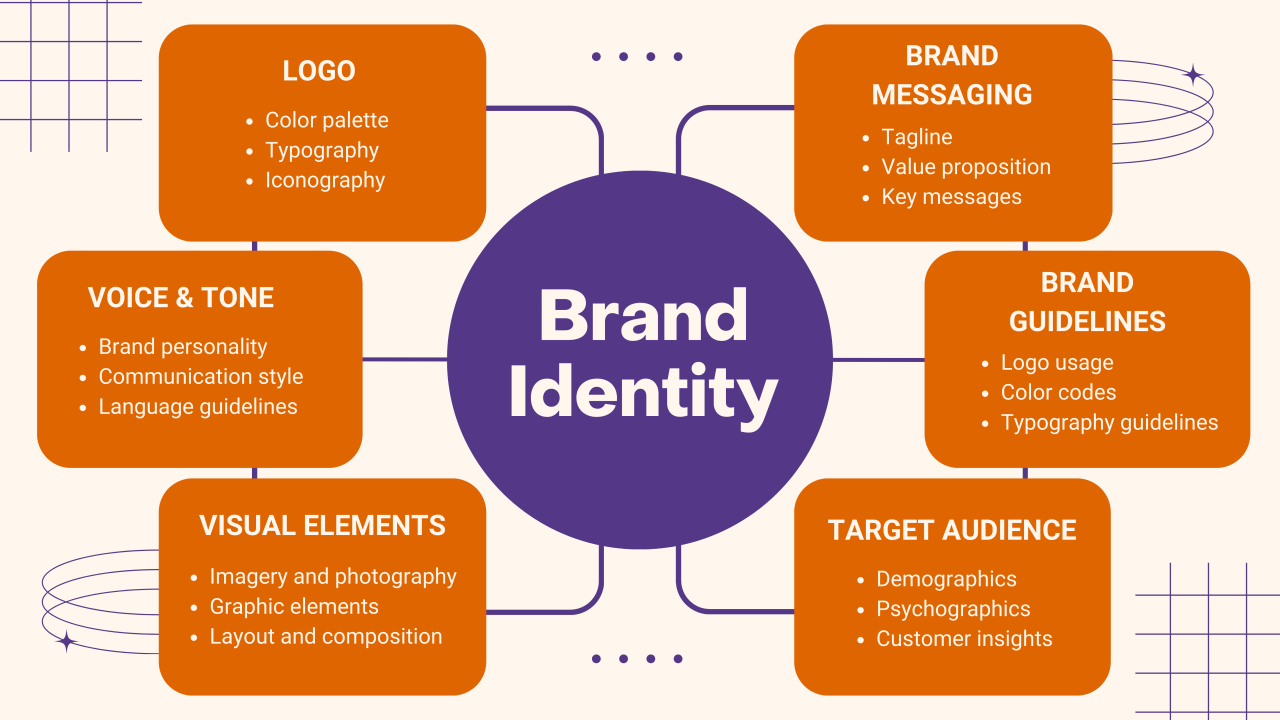
Brand identity is the collection of visual, verbal, and emotional elements that a business uses to present itself to the public.
It includes things such as your:
- Logo
- Brand colours
- Typography
- Packaging
- Photography style
- Brand voice
- Messaging
- Business values
- Customer experience
- Social media appearance
Simply put, brand identity is how your business chooses to be seen and remembered.
For example, imagine two African fashion businesses selling similar products. One uses inconsistent colours, unclear messaging, poor-quality images, and different logos across its social media platforms.
The other uses a consistent logo, carefully selected colours, professional photography, clear messaging, and distinctive packaging.
Even if both businesses sell products of similar quality, customers may perceive the second business as more established and trustworthy.
That perception is part of brand identity.
Brand Identity vs. Brand Image
Both are related, but they are not the same thing.
Brand identity is what your business creates and communicates.
Brand image is how customers actually perceive your business.
Think of it this way: your business can decide that it wants to appear modern, affordable, reliable, and youthful. Those decisions form part of your brand identity.
However, customers may still perceive the business differently.
This distinction matters because a strong brand does not stop at designing an attractive logo. Your communication and customer experience must support the identity you are trying to create.
Why Brand Identity Matters for African Businesses
Africa’s business environment is incredibly diverse. Businesses operate across different languages, cultures, income levels, traditions, and consumer behaviours.
This diversity creates opportunities, but it also creates competition.
A clear brand identity helps businesses communicate their value more effectively.
1. It Builds Recognition
Customers encounter hundreds of businesses every day through social media, billboards, websites, marketplaces, shops, and messaging apps.
Consistent branding makes it easier for people to recognize your business.
A customer may see your colours, packaging, typography, or social media design and immediately know that the communication comes from your company.
Recognition becomes particularly valuable when a business expands into new cities or countries.
2. It Builds Trust
People are often more comfortable buying from businesses that appear organized and consistent.
A professional identity can communicate that a business takes its products, services, and customers seriously.
For African startups and small businesses competing with established companies, this can be especially important.
Your branding cannot replace quality service. However, it can create the right expectations before customers interact with your business.
3. It Helps You Stand Out
Many markets contain businesses offering similar products.
Consider the food, fashion, beauty, logistics, fintech, hospitality, and retail industries. Customers often have several options.
A distinctive identity gives your business something recognizable beyond the product itself.
Your competitors may sell similar products, but your story, personality, visual style, packaging, and customer experience can make your business memorable.
4. It Supports Business Growth
A strong identity makes expansion easier.
Imagine a Nigerian business that starts with Instagram sales and later opens a physical store. Eventually, it launches a website, partners with retailers, and expands into Ghana and Kenya.
Without clear brand guidelines, its appearance may become inconsistent.
With a defined identity, the business can maintain the same basic personality across different platforms and markets.
The Key Elements of Brand Identity
Building a brand identity involves more than choosing a logo.
Logo
Your logo is one of the most recognizable elements of your brand.
It should be distinctive, readable, and adaptable. A good logo should work on a website, product package, social media profile, business card, signboard, and mobile screen.
Avoid making the logo unnecessarily complicated.
Brand Colours
Colours influence recognition and contribute to the personality of a brand.
For example, a business may use bold colours to communicate energy or softer tones to create a more refined appearance.
African businesses do not have to rely on predictable cultural colours simply because they operate in Africa.
Instead, colour choices should reflect the business, audience, positioning, and personality.
Typography
Fonts also communicate personality.
A technology company may prefer a clean, modern typeface, while a luxury fashion brand may choose something more elegant.
The important thing is consistency.
Choose a small set of fonts and establish rules for headings, body text, advertisements, presentations, and other communication materials.
Brand Voice
Brand voice refers to how your business communicates through words.
Is your brand formal, friendly, humorous, authoritative, youthful, educational, or conversational?
A financial company may need a professional and reassuring voice. A youth-focused fashion brand may communicate more casually.
Whatever style you choose, consistency matters.
Photography and Visual Style
Images can become a major part of your identity.
Determine what types of photographs, illustrations, graphics, icons, and videos represent your brand.
For African businesses, this also creates an opportunity to show authentic African environments, people, lifestyles, products, and stories rather than relying entirely on generic stock imagery.
Packaging
For product-based businesses, packaging is part of the brand experience.
A customer may interact with your packaging before using the product itself.
Well-designed packaging can communicate quality, personality, and professionalism while making products easier to recognize on shelves or online marketplaces.
Brand Values
Your identity should also reflect what your business believes.
Perhaps your company emphasizes affordability, sustainability, innovation, community, convenience, craftsmanship, or transparency.
These values should not simply appear on your website. They should influence how the business operates.
How African Businesses Can Build a Strong Brand Identity
Creating a brand identity does not have to begin with an expensive agency.
Small businesses can start with a clear strategy.
Step 1: Understand Your Audience
Before choosing colours and fonts, understand your customers.
Ask:
- Who are they?
- What problems do they have?
- What influences their purchasing decisions?
- Where do they discover businesses?
- What do they value?
- What alternatives do they already use?
A brand designed for university students in Nairobi may look very different from one serving corporate executives in Johannesburg.
Step 2: Define Your Position
Determine what makes your business different.
You could compete through affordability, convenience, quality, speed, specialization, customer service, local expertise, or innovation.
Your positioning should be clear enough for customers to understand why they should consider your business.
Step 3: Define Your Personality
If your brand were a person, how would it behave?
Would it be confident? Friendly? Sophisticated? Playful? Practical? Bold?
Writing down these characteristics can make future design and communication decisions easier.
Step 4: Create Your Visual System
Now develop your logo, colours, fonts, imagery, graphic elements, and other visual assets.
Do not design every element independently.
They should work together as one recognizable system.
Step 5: Create Brand Guidelines
Brand guidelines provide instructions for using your identity.
They can include:
- Logo variations
- Colour codes
- Font choices
- Image guidelines
- Social media rules
- Tone of voice
- Packaging standards
- Examples of correct and incorrect usage
Even a small business can create a simple brand guide.
Step 6: Apply It Consistently
Consistency is where many businesses struggle.
Your Instagram page may look polished while your website uses different colours, meanwhile your packaging may have another logo and your advertisements may use completely different language.
Every customer touchpoint should feel like it comes from the same company.
Should African Brands Look “African”?
There is no single answer.
Africa is not one culture or one market. The continent contains thousands of communities, languages, traditions, industries, and consumer groups.
An African business does not need to fill its branding with traditional patterns, colours, symbols, or imagery to prove its African identity.
At the same time, businesses can use African culture and heritage meaningfully when those elements genuinely connect to their story.
The goal should be authenticity rather than decoration.
A Ghanaian food company may build its identity around local culinary traditions. A Nigerian fashion brand may draw inspiration from indigenous craftsmanship. An African technology company may position itself around solving problems within African markets.
The approach depends on the business.
Common Brand Identity Mistakes
Several mistakes can weaken an otherwise promising business.
One is changing the logo constantly. Customers need time and repeated exposure to associate your visual identity with your company.
Another is copying competitors. Inspiration is useful, but your identity should communicate what makes your business different.
Some businesses also focus entirely on appearance while ignoring customer experience.
A beautiful logo cannot compensate for late deliveries, poor communication, unreliable products, or bad customer service.
Finally, avoid trying to appeal to everyone. A clear identity usually becomes stronger when a business understands who it is trying to serve.
Final Thoughts
Brand identity is much more than a logo. It is the combination of what your business looks like, sounds like, communicates, represents, and delivers to customers.
For African businesses, developing a strong identity can create opportunities to compete in increasingly crowded local and international markets.
The strongest identities are not necessarily the most expensive. They are the ones that are clear, consistent, authentic, relevant, and connected to the customers they serve.
Whether you are building a small local business or preparing an African company for international expansion, start by answering one simple question:
When customers encounter your business, what do you want them to remember?
Your answer can become the foundation of your brand identity.
Author

A content writer with a focus on marketing psychology, brand communication, and consumer behaviour across African markets.