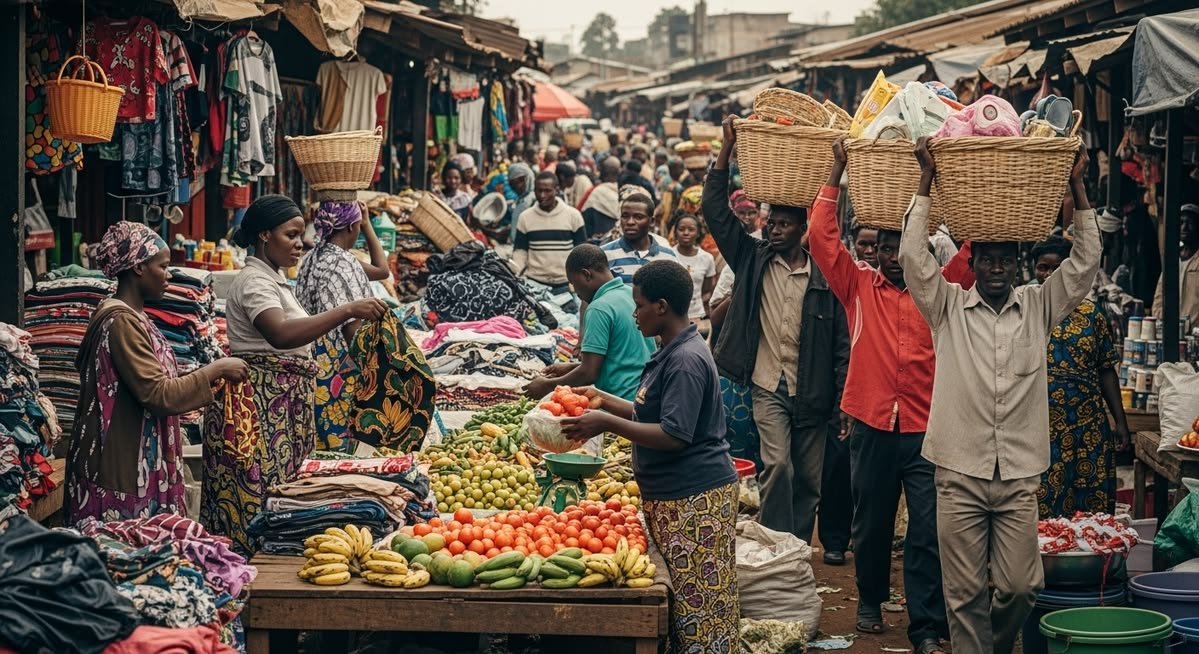
10 Major Trade Cities in Africa Every Brand Should Know
Africa is not one market, and a successful launch in one city does not guarantee success across an entire country.
Brands looking to expand need to understand where consumers shop, where wholesalers operate, how goods move and which cities influence neighbouring markets. Ten cities stand out as useful starting points for commercial research and market expansion.
The cities below represent different commercial strengths. Some are major consumer markets, others are wholesale centres, manufacturing clusters or logistics gateways. Understanding those differences helps brands choose where to introduce products, build distribution networks and invest in on-ground marketing.
1. Lagos, Nigeria: The starting point for many national launches
Verdict: A strong first market for brands seeking access to Nigeria’s large consumer economy, corporate buyers and established distribution networks.
Lagos is Nigeria’s largest commercial and economic centre. It brings together financial services, manufacturing, technology, retail, imports, entertainment and a large informal trading economy.
For consumer brands, the city offers several routes to market. Products can reach shoppers through supermarkets, neighbourhood retailers, open markets, wholesalers, pharmacies and online platforms. The challenge is choosing the right combination rather than trying to reach everyone at once.
A brand entering Lagos should research the commercial areas that match its category. Computer Village is associated with electronics and technology products, while markets such as Balogun and Trade Fair serve different wholesale and retail needs. Modern retail outlets and neighbourhood shops also reach different customer groups.
Lagos is also a useful location for testing brand awareness campaigns, sampling, retail visibility and distributor relationships before expanding into other Nigerian cities.
Best opportunities: Fast-moving consumer goods, electronics, fashion, beauty, food and beverages, financial services and technology.
2. Kano, Nigeria: A gateway to northern trade
Verdict: A strategic city for brands that want to reach northern Nigeria through established wholesale and trading networks.
Kano has a long history as a commercial centre. Its position connects northern Nigerian trade with neighbouring countries and wider West African routes.
The city has strong commercial traditions in textiles, leather, agriculture and general merchandise. Markets such as Kantin Kwari are associated with textile trading, while other wholesale and traditional markets serve a broad range of goods.
For brands, Kano offers access to customers beyond the city itself. A well-developed relationship with local wholesalers and distributors can help products reach surrounding towns and communities.
Marketing in Kano also requires an understanding of local buying habits, language preferences, religious and cultural considerations, and the role of trusted community relationships. A campaign designed for Lagos should not automatically be copied without adapting its message and execution.
Best opportunities: Textiles, clothing, household products, food, agricultural inputs, leather goods and affordable consumer products.
3. Onitsha, Nigeria: A major wholesale and redistribution centre
Verdict: An important destination for brands whose growth depends on wholesalers, bulk purchases and trader networks.
Onitsha is one of south-eastern Nigeria’s best-known commercial centres. Its Main Market has a strong reputation for wholesale and retail activity, attracting traders from different parts of Nigeria and beyond.
The city is particularly relevant to businesses selling products that move through established trader networks. Electronics, household goods, clothing, accessories, provisions and other consumer products are among the categories associated with its commercial activity.
Onitsha should be approached as more than a place to generate consumer awareness. For many brands, the priority is to understand the wholesale structure: who buys in bulk, who supplies smaller retailers, what influences trader loyalty and how stock moves to other markets.
A brand that understands these relationships can build a more reliable distribution plan than one that focuses only on advertising.
Best opportunities: Electronics, household goods, fashion, personal care, provisions and other high-volume consumer products.
4. Aba, Nigeria: Manufacturing, fashion and enterprise
Verdict: A valuable city for brands interested in local production, footwear, fashion, industrial supply and entrepreneurial networks.
Aba has a strong reputation for manufacturing and trading, particularly in clothing, footwear, leather products and other locally made goods.
The city is home to a large community of manufacturers, artisans, wholesalers and small businesses. This makes it relevant to brands seeking production partners, suppliers or access to customers who understand value and product quality.
Aba also offers opportunities for businesses selling equipment, packaging, raw materials and other supplies to manufacturers. Companies entering the market should investigate production capacity, quality-control processes, lead times and the consistency of supply before committing to large orders.
For fashion and footwear brands, the city can be useful for sourcing and partnerships. For consumer brands, the right route may involve retailers, wholesalers or specialist distributors.
Best opportunities: Fashion, footwear, leather goods, textiles, packaging, manufacturing equipment and industrial supplies.
5. Accra, Ghana: A commercial base for Ghanaian and regional business
Verdict: A useful starting point for brands entering Ghana and building relationships with corporate, retail and institutional buyers.
Accra is Ghana’s capital and a major centre for business, finance, services, government and retail. It brings together corporate decision-makers, importers, distributors, retailers and a growing consumer market.
For new brands, Accra can provide a practical location for market testing. Companies can assess customer response, identify distribution partners and develop relationships with retailers before extending their operations into other parts of Ghana.
The city has a mixture of modern shopping centres, traditional markets, independent shops and online retail businesses. These channels serve different customer groups, so brands should define their target audience before selecting where to spend their marketing budget.
Accra is also an important location for professional networking and business-to-business engagement. The World Trade Center Accra, for example, describes its role as connecting local businesses with international markets through trade facilitation and business services.
Best opportunities: Food and beverages, beauty, fashion, consumer goods, financial services, technology and professional services.
6. Kumasi, Ghana: An important inland trading centre
Verdict: A strong city to consider when a brand wants to reach customers and traders beyond coastal Ghana.
Kumasi is one of Ghana’s major commercial centres. Its central location makes it relevant to businesses distributing products across the Ashanti Region and other inland areas.
The city is widely associated with the Kejetia market and a network of wholesalers, retailers and independent traders. Its commercial activity spans food, clothing, household goods, agricultural products and general merchandise.
Brands should consider Kumasi when building a Ghana-wide distribution strategy. Relying only on Accra can leave important customer groups and trading networks underserved.
A practical approach is to identify the distributors and retailers already serving the relevant product category. Businesses can then plan stock availability, retail visits and local marketing around those relationships.
Best opportunities: Food products, household goods, fashion, personal care, agricultural products and affordable consumer goods.
7. Nairobi, Kenya: A regional centre for business and distribution
Verdict: A strong candidate for brands looking for a commercial base in East Africa.
Nairobi is Kenya’s capital and a major centre for finance, technology, professional services, logistics and corporate activity. It is also an important location for regional offices and international businesses operating in East and Central Africa.
The city has a varied retail environment, from supermarkets and shopping centres to open markets, independent shops and digital commerce platforms. This gives brands several ways to reach customers, depending on their product and positioning.
Nairobi is particularly relevant to businesses considering Kenya as a starting point for wider regional expansion. However, a company should not assume that a presence in Nairobi automatically provides access to every East African market. Each country has its own regulatory requirements, customer preferences, distributor networks and competitive conditions.
The Kenyan government’s investment promotion agency identifies the country’s transport connections, airports, seaports and regional market access as important parts of its investment proposition.
Best opportunities: Technology, financial services, beauty, food and beverages, fashion, healthcare and consumer products.
8. Mombasa, Kenya: A major gateway for regional goods movement
Verdict: A key location for brands whose business depends on imports, freight, coastal distribution and access to inland markets.
Mombasa is home to Kenya’s principal seaport and plays a significant role in the movement of goods into East Africa. The port connects maritime trade with road and rail routes serving inland destinations.
This makes Mombasa relevant to importers, manufacturers, logistics companies and brands planning their distribution infrastructure.
The city also has its own commercial and consumer market. Businesses selling food, household products, building materials, personal care products and other everyday goods may find opportunities among local customers and businesses.
Brands should distinguish between using Mombasa as a logistics gateway and treating it as a consumer market. The two strategies require different research, partners and operating plans.
Best opportunities: Import distribution, logistics, food products, building materials, industrial supplies and coastal retail.
9. Abidjan, Côte d’Ivoire: A commercial gateway to Francophone West Africa
Verdict: A useful city for brands exploring Côte d’Ivoire and the wider Francophone West African market.
Abidjan is Côte d’Ivoire’s largest city and an important centre for finance, trade, industry and logistics. Its port supports the movement of goods into the country and connects commercial activity with regional trade routes.
The city is particularly relevant to businesses considering expansion beyond Anglophone West Africa. Companies entering Côte d’Ivoire need to plan for French-language communication, local consumer expectations, product requirements and the right distribution partners.
Abidjan also forms part of the wider Abidjan–Lagos coastal corridor, which links major commercial centres in Côte d’Ivoire, Ghana, Togo, Benin and Nigeria.
For brands, this creates an opportunity to think beyond a single-city launch. A well-planned campaign can begin in Abidjan while the company develops a broader understanding of the markets and trade routes connecting the region.
Best opportunities: Food and beverages, consumer goods, manufacturing, logistics, agriculture-related products and financial services.
10. Johannesburg, South Africa: A major centre for corporate and national distribution
Verdict: A strong option for brands seeking access to South Africa’s corporate market and established distribution infrastructure.
Johannesburg is widely recognised as South Africa’s commercial and financial hub. It hosts major businesses, financial institutions, corporate headquarters and a large network of professional service providers.
The city also plays an important role in national distribution. Although it is inland, its transport connections and logistics infrastructure make it a major point for moving goods across South Africa.
For brands entering the country, Johannesburg can be a practical location for distributor meetings, retail partnerships, business-to-business engagement and consumer campaigns.
Companies should also assess the role of other South African cities. Durban is important for port activity, while Cape Town and Pretoria have their own commercial and consumer markets. The right distribution structure depends on the product category and the locations where target customers live and shop.
Best opportunities: Consumer goods, financial services, technology, fashion, healthcare, industrial products and business services.
How should brands choose the right African trade city?
A city may have a large population or a busy market, but that does not automatically make it the best location for your product. Before committing to a launch, assess the commercial conditions that will determine whether the business can sell consistently.
| What to assess | Questions to ask |
|---|---|
| Target customers | Who buys this product, and where do they shop? |
| Market demand | Is there evidence of demand at the intended price? |
| Competition | Which brands already serve the market? |
| Distribution | Who supplies wholesalers, retailers and modern trade? |
| Logistics | How will stock enter, move through and leave the city? |
| Regulations | What registration, labelling, tax or product approvals apply? |
| Marketing | Which languages, channels and local messages will reach buyers? |
| Commercial partners | Are reliable distributors and retail partners available? |
Choose a city based on your business model
A consumer goods company may prioritise Lagos, Accra or Nairobi because of their concentration of retailers, corporate buyers and consumers.
A manufacturer may find Aba or Kumasi more relevant because of their production and trading networks.
An importer may focus on Mombasa or Abidjan because port access and freight movement are central to its operations.
A company selling products across borders may need to consider a combination of cities rather than selecting one location and expecting it to serve every market.
Do not confuse market access with market readiness
A city can provide access to a large customer base, but the business still needs the right product, price, local partners and distribution capacity.
Before launching, brands should conduct field research, speak with wholesalers and retailers, review competing products and test customer response. They should also confirm the legal requirements for importing, registering and selling their products in the country.
The African Continental Free Trade Area creates a framework for expanding intra-African trade, but it does not remove every customs procedure, regulatory requirement or country-specific business challenge. Brands still need to understand the rules that apply to each product and destination.
What this means for brands planning to expand
Africa’s commercial opportunities are spread across different cities, industries and trade corridors. Lagos and Johannesburg are important corporate and distribution centres. Kano and Onitsha have strong wholesale traditions. Accra and Nairobi offer access to active business environments, while Mombasa and Abidjan have important logistics roles.
The most effective expansion strategy begins with the customer and works backwards. Identify where the customer buys, understand who supplies that location, and build a route to market that the business can sustain.
At Brand Envoy Africa, we believe market knowledge must come from understanding the people, retailers and trading environments on the ground. We discovered our markets on foot. Since 2015, we have worked on campaigns across Nigeria, Ghana, Kenya, Liberia and South Africa.
Our field experience includes campaigns such as 1xBet’s field activation across Liberia, Nigeria, Ghana and Kenya, including Nairobi. Each market requires its own understanding of consumers, local execution and commercial relationships.
Planning to launch or grow in one of these markets? Tell us about your product, target customer and expansion plans. Brand Envoy Africa can discuss how on-ground marketing and distribution support may fit your objectives.
Email: business@brandsenvoy.com
Phone: +234 807 473 7662
Explore our guide to market entry strategy for Africa and our guides to the top 20 markets in Nigeria, the top 10 markets in Ghana and the top 10 markets in Kenya.
Frequently asked questions
1. Which African city is best for starting a business?
There is no single best city for every business. Lagos, Nairobi, Accra and Johannesburg offer different commercial advantages, while cities such as Aba, Onitsha and Kano may be more suitable for specific manufacturing and wholesale activities. Choose based on your customers, product category and distribution needs.
2. Which African cities are major wholesale markets?
Onitsha, Kano, Kumasi and Aba are notable trading and wholesale centres. Their commercial strengths differ, so brands should research the specific markets and trader networks relevant to their products.
3. Is Lagos a good entry point for foreign brands entering Africa?
Lagos can be a useful starting point for brands entering Nigeria because of its commercial activity, consumer market and distribution networks. It should not be treated as a gateway to every African country. Expansion into other markets requires separate research and local partners.
4. Why is Nairobi important for businesses expanding into East Africa?
Nairobi is a major centre for finance, technology, professional services and regional business operations. Its transport connections and commercial infrastructure make it useful for companies considering Kenya and nearby markets. Brands should still assess each neighbouring country’s regulations and distribution conditions.
5. What should a brand research before entering a new African market?
Research customer demand, competitor pricing, local regulations, import requirements, distributors, retailers, logistics costs and marketing channels. Field visits and conversations with local trading partners can help businesses test assumptions before committing significant resources.
Author

A content writer with a focus on marketing psychology, brand communication, and consumer behaviour across African markets.