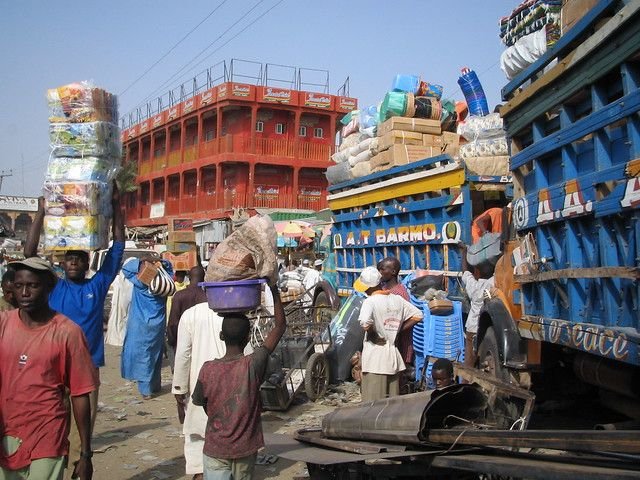
Top 10 Biggest Markets in Kano and What They Sell
Kano’s biggest market depends on what you want to buy: Dawanau is the heavyweight for grains and agricultural commodities, while Kantin Kwari is the major destination for textiles.
For general merchandise, traditional goods and everyday shopping, Sabon Gari, Kurmi, Rimi and Singer are among the city’s most important commercial centres.
Kano has more than 50 markets of different sizes and specialisations across its metropolitan area. These markets connect farmers, wholesalers, manufacturers, retailers and buyers from other Nigerian states and neighbouring West African countries. Rather than present an unsupported ranking by physical size, this guide highlights ten of Kano’s most significant markets by their commercial importance, product specialisation and reach.
1. Dawanau International Grains Market
Location: Dawanau, Dawakin Tofa axis, on the outskirts of Kano metropolis
Market days: Daily wholesale trading
What sells: Maize, millet, sorghum, rice, cowpeas, soya beans, groundnuts, sesame and other agricultural commodities.
Dawanau is widely recognised as one of West Africa’s major grain trading centres. It is the first market to consider if you are buying agricultural produce in large quantities for food processing, distribution, animal feed production or resale.
Traders source commodities from farming communities and regional collection points before selling them to wholesalers, retailers and buyers from outside Kano. Some transactions involve large quantities, including truckloads.
Who should visit? Food processors, grain merchants, animal-feed manufacturers, bulk buyers and agricultural distributors.
Before paying, check the grain quality, moisture level, cleanliness, bag weight and prevailing price. If you are buying for a business, agree on the delivery arrangement and quality specifications before the goods leave the market.
2. Kantin Kwari Market
Location: Fagge area, Kano metropolis
Market days: Daily trading
What sells: Ankara, lace, brocade, shadda, cotton fabrics, clothing materials, uniforms, veils and other textiles.
Kantin Kwari is Kano’s best-known specialised textile market and a major fabric destination for buyers from across Nigeria and neighbouring countries.
The market serves tailors, fashion designers, clothing retailers, fabric wholesalers and individuals shopping for weddings, celebrations and everyday clothing. Buyers can find different grades and designs, with prices varying according to fabric quality, origin, quantity and supplier.
Who should visit? Fashion businesses, textile importers, tailors, clothing retailers and bulk fabric buyers.
If you are purchasing for resale, compare several sellers before committing. Ask whether the quoted price applies to a single piece, bundle or bale, and inspect the fabric for defects.
3. Sabon Gari Market (Abubakar Rimi Market)
Location: Fagge Local Government Area, Kano
Market days: Daily trading
What sells: Manufactured goods, beverages, packaged foods, second-hand clothing, footwear, household products and general merchandise.
Sabon Gari is one of Kano’s major general merchandise centres. It attracts traders and shoppers looking for a wide range of consumer products rather than one specialised category.
Its commercial importance makes it useful for retailers who want to compare suppliers, restock everyday products or source goods for distribution to other parts of northern Nigeria.
Who should visit? Retailers, wholesalers, provision-shop owners, distributors and shoppers looking for variety.
When buying packaged food or beverages, check expiry dates, product seals and relevant regulatory information. Keep receipts and record supplier details for business purchases.
4. Kurmi Market
Location: Kano Municipal area, within the historic city
Market days: Daily trading
What sells: Traditional crafts, leather goods, local textiles, household items, spices, souvenirs, handicrafts and selected foodstuffs.
Kurmi is one of Kano’s oldest and most historically significant markets. Its location within the ancient city gives it a distinctive character, while its mix of traditional products and everyday merchandise attracts both residents and visitors.
The market is particularly useful for buyers interested in locally made products, cultural items and traditional craftsmanship. It also offers opportunities for retailers and tourism-related businesses seeking products with a strong regional identity.
Who should visit? Tourists, craft retailers, souvenir businesses, traders in traditional goods and buyers interested in Kano’s commercial heritage.
If you are buying crafts for resale, ask about the materials, production process and whether the item is locally made. This can help you explain the product accurately to your own customers.
5. Rimi Market
Location: Kano Municipal area
Market days: Daily trading
What sells: Food items, household products, general merchandise and everyday consumer goods.
Rimi is an important all-purpose market serving residents and traders within Kano. It is one of the markets that help meet everyday household and retail demand.
Buyers can visit for a range of food and non-food products. Its general-market character makes it useful for people who want to compare several product categories in one trip.
Who should visit? Household shoppers, small retailers, food traders and neighbourhood distributors.
For business purchases, compare unit prices and quantities across different sellers. A lower price is not always better if the product quality, measurement or packaging differs.
6. Singer Market
Location: Singer area, Kano metropolis
Market days: Daily trading
What sells: Provisions, packaged foods, groceries and other fast-moving consumer goods.
Singer is a useful destination for businesses sourcing everyday consumer products. Its focus on provisions and packaged food makes it relevant to retailers, mini-marts, food vendors and wholesalers.
The market is particularly practical for buyers who need to replenish stock regularly. However, prices and availability can change with supply conditions, transport costs and demand.
Who should visit? Provision-store owners, food retailers, wholesalers, restaurant operators and household shoppers.
Check expiry dates, packaging integrity and the manufacturer’s information before purchasing packaged products. For larger orders, ask for a written record of quantities and prices.
7. Yankaba Market
Location: Nassarawa area, Kano metropolis
Market days: Daily trading
What sells: Fresh vegetables, spices, processed food products and other agricultural items.
Yankaba is an important market for fresh produce and food ingredients. It connects traders selling agricultural products with households, restaurants, food vendors and retailers.
Its relevance is especially clear for businesses that depend on regular supplies of vegetables and spices. Fresh produce is perishable, so buyers should consider the time of purchase, storage arrangements and transport conditions.
Who should visit? Vegetable retailers, caterers, restaurant owners, food vendors and household shoppers.
If you are buying in bulk, inspect the produce carefully and separate damaged items. Arrange transportation that protects the goods from excessive heat and crushing.
8. Yan Lemo Market
Location: Naibawa area, Kano metropolis
Market days: Daily trading
What sells: Fruits, plantain, bananas and other fresh produce.
Yan Lemo is a specialised fruit market that serves retailers, households, juice sellers and other businesses that need fresh produce.
It is a useful sourcing point for fruit sellers and food businesses. Because fruits have different ripening periods and storage requirements, buyers should assess freshness rather than choosing stock based on appearance alone.
Who should visit? Fruit retailers, juice businesses, food vendors, supermarkets and household shoppers.
For commercial purchases, sort produce according to ripeness and expected selling time. This reduces waste and helps businesses plan their stock rotation.
9. Kofar Ruwa Market
Location: Dala area, Kano metropolis
Market days: Daily trading
What sells: Vehicle spare parts and related automotive products.
Kofar Ruwa is associated with vehicle spare-parts trading. It serves mechanics, vehicle owners, automotive retailers and businesses involved in repairs and maintenance.
The market is worth considering when sourcing replacement parts, but buyers should be careful about compatibility and product quality. A part that looks similar may not be suitable for a particular vehicle model.
Who should visit? Mechanics, auto-parts retailers, fleet operators and vehicle owners.
Take the vehicle model, year and relevant part number when shopping. Where possible, compare the old component with the replacement before paying.
10. Kara Livestock Market
Location: Dala area, Kano
Market days: Regular livestock trading; confirm the active trading schedule locally
What sells: Livestock, including animals for meat production and commercial trading.
Kara is one of the livestock-related markets serving Kano’s animal trade. Livestock markets connect sellers, buyers, transporters, butchers and other participants in the meat supply chain.
Demand can increase around religious celebrations and other periods when households and businesses purchase animals in larger quantities. Buyers should still assess the animal’s health and condition rather than relying only on size or price.
Who should visit? Livestock traders, butchers, meat businesses and buyers purchasing animals for commercial or household purposes.
For large purchases, inspect the animal and agree on transportation, handling and payment arrangements before completing the transaction.
Quick comparison: 10 important markets in Kano
| Market | Main location | Main products | Best suited to |
|---|---|---|---|
| Dawanau | Dawakin Tofa axis | Grains and agricultural produce | Bulk grain buyers |
| Kantin Kwari | Fagge | Textiles and fabrics | Fashion and textile businesses |
| Sabon Gari | Fagge | General merchandise | Wholesalers and retailers |
| Kurmi | Kano Municipal | Crafts and traditional goods | Souvenir and traditional-product buyers |
| Rimi | Kano Municipal | Food and general goods | Households and small retailers |
| Singer | Singer area | Provisions and packaged foods | Food retailers |
| Yankaba | Nassarawa | Vegetables and spices | Food vendors and produce retailers |
| Yan Lemo | Naibawa | Fruits and plantain | Fruit sellers and juice businesses |
| Kofar Ruwa | Dala | Vehicle spare parts | Mechanics and auto-parts dealers |
| Kara | Dala | Livestock | Livestock traders and butchers |
Market-day note: The markets listed above are generally active daily or operate as permanent trading centres. Some agricultural and livestock markets may have busier periods or locally observed trading schedules. Confirm current activity with traders or market associations before making a long journey.
How to choose the right Kano market
The best market depends on your purpose. A retailer buying packaged food should not approach the trip in the same way as a textile wholesaler or a grain processor.
Use these practical guidelines:
- Identify the product category first. Dawanau is more relevant for bulk grains, while Kantin Kwari is the specialist destination for fabrics.
- Decide whether you need wholesale or retail quantities. Some markets accommodate both, but the best suppliers and prices may differ.
- Compare at least three sellers. Ask about quality, measurement, minimum order quantities and delivery.
- Inspect before paying. Check fabric quality, food packaging, produce freshness or spare-part compatibility.
- Plan transport before buying. Bulk purchases can become expensive if loading and delivery are not considered.
- Keep transaction records. Receipts, supplier contacts and product specifications help with repeat purchases and dispute resolution.
What Kano’s markets mean for businesses and brands
Kano’s markets are more than shopping destinations. They are distribution networks where brands can understand consumer behaviour, identify retailers, test products and build relationships with traders.
For a company entering northern Nigeria, market selection should follow its product category and target customer. A food brand may need to understand the distribution networks around Singer, Sabon Gari and Dawanau. A fashion business may find Kantin Kwari more relevant, while an automotive brand may focus on specialist spare-parts clusters.
Before launching a campaign, businesses should map the market, understand local buying habits, identify influential distributors and plan how products will reach retailers after the activation ends.
For a wider national perspective, explore ANTVT’s guide to the Top 20 Markets in Nigeria and Brand Envoy’s Market Entry and Distribution services.
Kano’s commercial strength lies in the diversity of its markets. Understanding what each one sells—and who it serves—makes it easier for shoppers, traders and businesses to make better decisions.
Frequently Asked Questions
1. What is the biggest market in Kano?
Dawanau is widely recognised as one of the largest grain and agricultural commodity markets in West Africa. However, there is no single market that is objectively the biggest in every category. Kantin Kwari is a major textile market, while Sabon Gari and Kurmi are important general and traditional merchandise centres.
2. Which market sells the cheapest fabrics in Kano?
Kantin Kwari is the main market to explore for wholesale and retail fabrics. Prices depend on fabric type, quality, quantity and supplier, so compare different traders before buying.
3. Which Kano market is best for buying grains in bulk?
Dawanau International Grains Market is a leading destination for bulk grains, including maize, millet, sorghum, rice and cowpeas.
4. Are Kano markets open every day?
Many major markets in Kano operate daily. However, trading intensity, individual shop schedules and special market activities can vary. Confirm with local traders before travelling.
5. Which market is best for traditional crafts and souvenirs?
Kurmi Market is a strong option for traditional crafts, leather goods, souvenirs and other products associated with Kano’s commercial heritage.
Sources and further reading:
Author

A content writer with a focus on marketing psychology, brand communication, and consumer behaviour across African markets.